
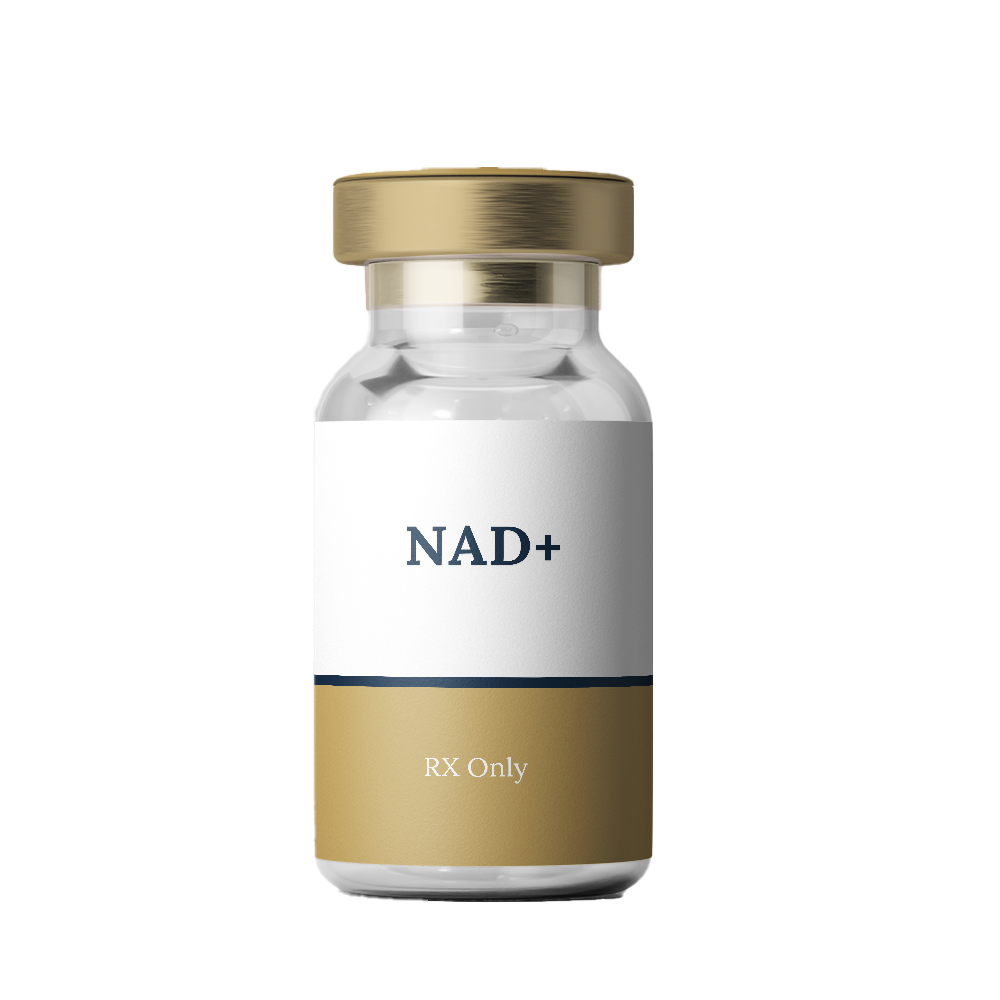
$199.00
Initial charge of $39 for consult, price of medication(s) charged upon consult approval.
Direct mitochondrial support to boost energy, brain function, and recovery. One of the most effective ways to replenish NAD+ levels lost with age.
NAD+ injections provide direct mitochondrial support to boost energy, brain function, and recovery. Starting at $250, this therapy is one of the most effective ways to replenish NAD+ levels lost with age. NAD+ is a coenzyme found in every cell in your body. It plays a critical role in mitochondrial energy production (ATP), DNA repair and cellular defense, brain function and neuroprotection, and sirtuin activation linked to lifespan extension. As we age, NAD+ levels decline sharply—by as much as 50% by age 40. Low NAD+ is linked to fatigue, poor recovery, brain fog, and accelerated aging. These injections are a direct, powerful way to replenish NAD+ levels and restore youthful cellular performance. NAD+ injections help recharge your cellular batteries from the inside out.
NAD+ is involved in over 500 metabolic functions and acts as a fuel source for your cells’ mitochondria. NAD+ injections deliver this molecule directly into your bloodstream, bypassing the GI tract for maximum bioavailability and rapid uptake. Key benefits:
This therapy addresses various age-related concerns:
Is NAD+ better as an injection or IV?
Injections are a powerful, convenient alternative to IV therapy. You still get high absorption without needing to visit a clinic.
Can I take this with other longevity treatments?
Yes—NAD+ stacks well with Lipo-B, Metformin, Methylene Blue, or Glutathione for enhanced results. Your provider can recommend a custom protocol.
Does it hurt
Most patients report little to no discomfort. It’s a quick, shallow injection using a tiny insulin syringe.
Is it safe to take long term?
Yes—NAD+ is naturally occurring in your body. Replenishing it as you age has been shown to support long-term health with very low risk.
Do Not Use This Medication If You:
NAD+ injections are a compounded prescription therapy and will only be prescribed after a medical evaluation. All products are prepared by licensed U.S. pharmacies and administered with guidance from your Pentavia provider. Side effects are rare but may include mild flushing, headache, or nausea—usually resolved with slower administration or dose adjustment.